- This post contains affiliate links. Read more here.
- Not a substitute for professional veterinary help.
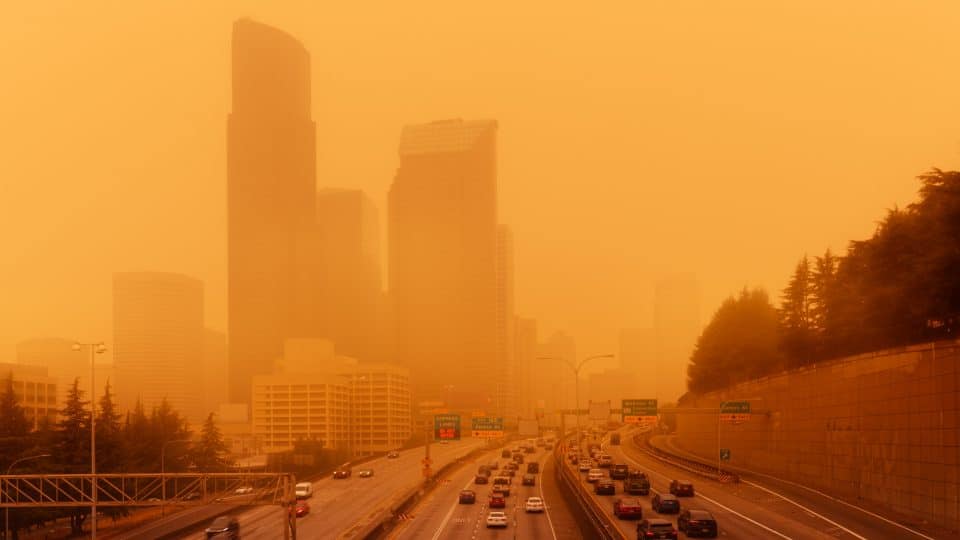
Wildfires can devastate homes, the environment, and health. Smoke from wildfires contains particles that cause irritation and raise the risk of respiratory or cardiovascular issues.
Many people may not realize it, but smoke inhalation can be just as dangerous for pets as it is for people.
“If you live close to a wildfire area, and your breathing is affected, chances are your pet’s breathing is too,” says Dr. Nell Ostermeier, founder of People + Pet Integrative Therapies.
Luckily, many of the same wildfire precautions you might take for yourself will help keep your pets safe from smoke, too.
Read on to learn how you can protect your pets during a wildfire, including tips for preventing smoke inhalation and evacuating safely.
The Dangers of Smoke Inhalation for Dogs and Cats
The biggest dangers of smoke come from the chemical irritants, which can constrict a pet’s airway, cause inflammation, and irritate the lungs or eyes. The intense heat from nearby wildfire smoke can even burn the nose and throat.
Signs of mild smoke inhalation
The signs of mild smoke exposure in dogs and cats will be similar to those in people, Dr. Ostermeier explains.
These signs can include:
- Red, squinty, or runny eyes
- Shortness of breath
- Coughing or gagging
- Sneezing or runny nose
Dr. Ostermeier says mild cases of smoke inhalation typically have a good outcome. The survival rate for dogs without burn injuries is around 90%.
Signs of severe smoke inhalation
Pets trapped near a fire may develop serious symptoms of smoke inhalation, Dr. Ostermeier says. Severe smoke inhalation is a medical emergency.
Signs might include:
- Lethargy or weakness
- Blue or purple-tinged gums and tongue
- Vomiting
- Burns or blistering on the face
- Collapse or loss of consciousness
The outcome of severe smoke inhalation depends on how long the smoke exposure lasted and it caused permanent damage to your pet’s respiratory system.
Do Some Dogs and Cats Have a Higher Risk of Smoke Inhalation?
Just like young children and seniors are more at risk for smoke-related health issues, certain dogs and cats are also more vulnerable to poor air quality, explains Dr. Veronica Villanueva, medical director at VEG Anaheim Hills.
Dr. Villanueva says pets with the highest risk include:
- Flat-faced breeds. Brachycephalic dogs and cats, like Pugs and Persians, often already have breathing difficulties. This puts them at higher risk for smoke-related health issues.
- Senior pets. Dogs over age 7 and cats over age 8 or so are considered seniors. Senior pets are often more affected by poor air quality.
- Overweight pets. Dogs and cats with a higher body weight can develop breathing problems that might make them more likely to develop smoke-related health issues.
- Pets with existing health issues. Conditions like asthma or bronchitis can affect your pet’s airways, making it more likely they’ll experience difficulties in poor-quality air.
When to Visit a Vet for Smoke Inhalation
“If you suspect smoke inhalation, the safest bet is to take your pet to see a veterinarian,” Dr. Ostermeier says.
A mild case of smoke inhalation may not cause many symptoms, but a vet visit is still wise even if your pet seems mostly fine. Quick vet attention can get your pet the treatment they need to recover.
For severe cases, your pet may need to be hospitalized on supportive IV fluids, medications, and oxygen therapy, according to Dr. Ostermeier.
Precautions to Take During Wildfire Season
If you’re close to a wildfire but aren’t under an evacuation order, the same guidelines that keep you safe also apply to your pets. These precautions can help:
- Stay indoors. If it’s too smoky outside for you, it’s not safe for your pets, either. Bring outdoor pets inside and keep your dog’s bathroom breaks to the bare minimum. You could also consider puppy pads as a temporary measure for small dogs.
- Wipe their fur down. As soon as you bring your dog inside, wipe down their coat and paws to keep them from licking toxins.
- Use an air purifier. HEPA filters or air purifiers can eliminate certain smoke toxins from the air inside your home and make it safer for you and your pets.
- Avoid heavy exercise or long walks outdoors. Help your pet burn off energy with indoor games and activities. For example, try wand toys and teasers for cat playtime, and challenge your dog with a training session or indoor agility workout.
Will a mask help my dog?
Some companies make dog-safe respirator masks designed to protect dogs from poor air quality. Dr. Villanueva says a mask’s effectiveness can vary by brand.
Note that poorly fitted masks can prevent your dog from panting, which may increase their risk of heat stroke. So ask your vet before trying to put a mask on your dog.
Important: Avoid masking cats altogether.

How to Prepare for Evacuation with Pets
If you’re under an evacuation order or expect one, you’ll want to gather supplies ahead of time so you can be ready at a moment’s notice.
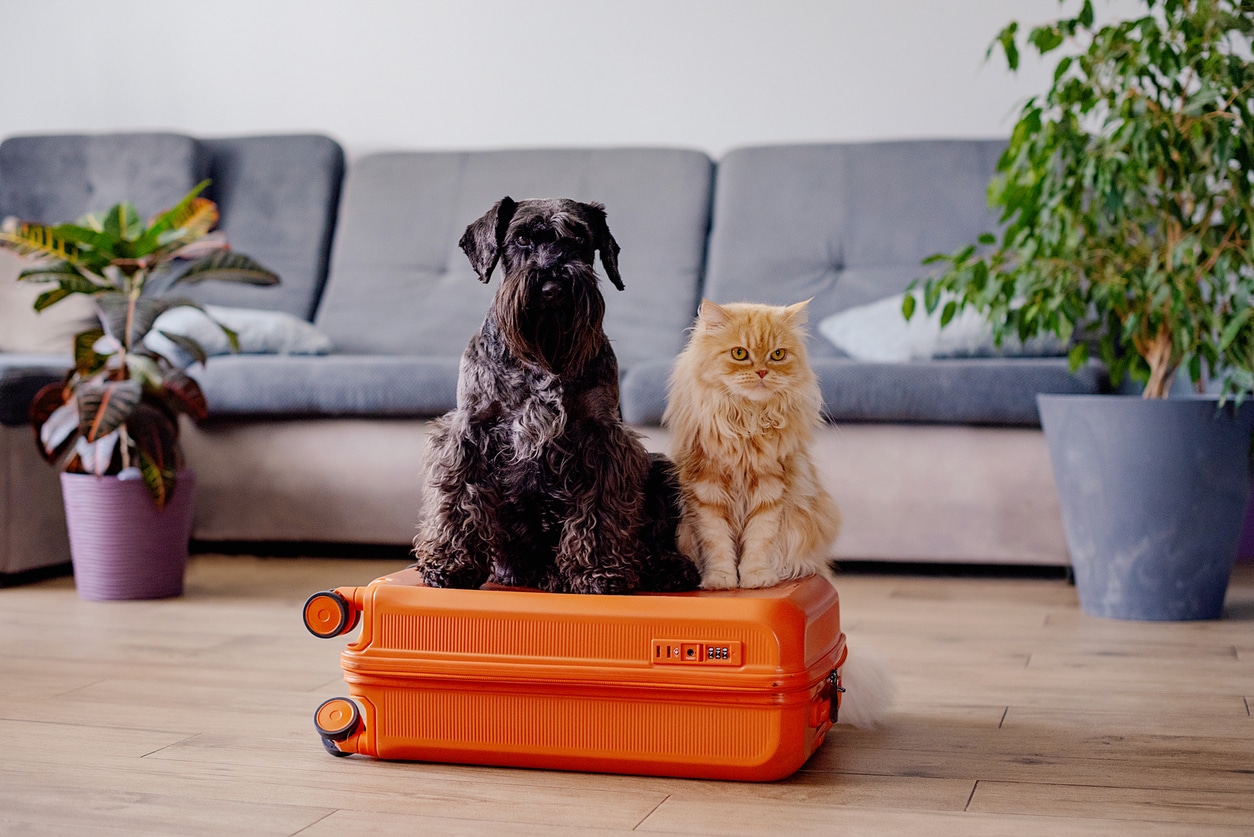
This includes safe transportation for your pets. Cats and small dogs should ride in a carrier that’s been crash-tested for safety. Bigger dogs may be more comfortable with a travel harness secured with a seatbelt buckle.
Essentials to include in your pet’s go bag include:
- Food and water. Pack enough dry or canned food to last through your planned evacuation. Bring extra water bottles and a bowl to keep your cat or dog hydrated.
- Leash and collar. Keep your pets safe during bathroom breaks by walking dogs with a secure leash attached to a properly fitted collar or harness. Cats will need time to get used to wearing a harness and may prefer to use a travel litter box.
- First aid and medicine. A pet first aid kit can help you patch up minor injuries. If your pet takes medication, make sure you have enough to last until you can visit a vet for a refill.
- Identification. Make sure your pets are wearing an ID tag with your contact information, including your phone number and email. Having your pet microchipped ahead of time is a good idea, just in case they lose their collar.
- Medical records. Bring any vet records if your pet has existing health issues.
- Comfort items. Familiar toys, blankets, or treats can help your pet feel safe and secure during a scary time.
It’s also important to stay calm as you get yourself and your pets ready for a car ride to safety.
Pets can pick up on your emotions, and an anxious dog or cat may breathe faster or pant, Dr. Ostermeier explains. This can increase their chances of smoke inhalation and related symptoms.
Once you’ve reached a safe destination, you and your pets can comfort each other with plenty of scratches, cuddles, and treats!